Foot Health Clinic
Southminster

Ingrowing Nails
Ingrowing nails ( onychocryptosis) can be a painful condition that can happen to anyone.
Some people are more predisposed through genetics, others may develop them through tight footwear, injury or incorrect nail cutting.
Treatment can vary from a one-off appointment to correct the problem, to regular appointments to manage it or nail surgery if regular treatment can't prevent the discomfort.
Your podiatrist will assess the severity of the problem and formulate a treatment plan with you.
Verrucas
Corns
Verrucas (verruca pedis) are part of the human papilloma virus (HPV) family. They are the same as warts and have over 120 different strains which can be why they look and act differently to one another.
Because they are a type of virus it can be hard for some people to get rid of them, especially if they have a weak immune system.
Any verruca treatment, either in clinic or at home, aims to disrupt the skin with the virus tissue in it and to also stimulate an immune response.
There are no verruca treatments available that can get rid of a verruca within one application and we advise regular follow-ups to ensure the treatment is the most effective.
Which Treatments Are There?
The two treatments offered in clinic are acid and freezing (cryotherapy), both have similar success rates.
Freezing application is as quick as up to three 20 second sprays per verruca.
Acid is a paste and is normally painless but must be kept on and dry for up to 5 days as directed by your podiatrist.
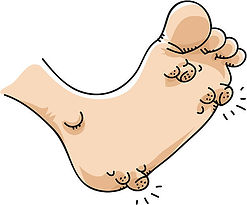
Corns are a different type of condition to verrucas; they aren't a virus and are in fact compressed hard skin. They usually are a result of pressure on one particular part of your foot and are normally uncomfortable.
They aren't infectious and can appear anywhere on your feet from the soles, in between toes and even on the top of your toes.
Treatments plans can be tailored to everyone differently depending on the cause of a corn, for example joint deformities, poor footwear or a reduction in fatty padding on the soles of your foot.
We do not advise using at home corn plasters as these can damage healthy skin around a corn.